
In the vast expanse of the universe, cosmic radiation is like that uninvited guest who shows up to every party—unpredictable and a little bit spooky. But don’t panic! This high-energy phenomenon isn’t just a plot twist in a sci-fi movie; it’s a crucial part of our cosmic environment. From the sun’s rays to distant supernovae, cosmic radiation is constantly showering Earth, reminding us that we’re all part of a much larger cosmic dance.
But what exactly is cosmic radiation, and why should anyone care? Well, understanding it could be the difference between a simple science project and a mind-blowing journey through the universe’s secrets. So, buckle up and prepare to explore the thrilling world of cosmic radiation—where science meets adventure and even a little humor. Who knew the universe could be so entertaining?
Overview Of Cosmic Radiation
Cosmic radiation consists of high-energy particles originating from beyond the solar system. These energetic particles include protons, electrons, and atomic nuclei. Solar cosmic rays arise from solar flares and coronal mass ejections. Supernova explosions contribute significantly to the constant flow of cosmic rays entering the Earth’s atmosphere.
Interactions occur as cosmic radiation hits Earth’s atmosphere, leading to the production of secondary particles. These secondary particles, including muons and neutrinos, play a role in atmospheric chemistry and contribute to background radiation levels. The influence of cosmic radiation reaches the surface, where it exposes living organisms to low doses of radiation.
Cosmic radiation’s effects include potential impacts on human health. Long-term exposure to cosmic rays can elevate cancer risks and genetic mutations. Moreover, astronauts encounter heightened exposure levels beyond Earth’s protective magnetic field. Monitoring these effects contributes to space travel safety guidelines and astronaut health.
Radiation levels vary based on altitude and geographic location. Air travel can increase exposure due to reduced atmospheric shielding. Research continues into measuring cosmic radiation’s influence, enhancing predictive models for dialogue on health implications.
Understanding cosmic radiation contributes to the broader knowledge of astrophysics and atmospheric science. Scientists study its properties to explore celestial phenomena. Cosmic radiation serves as a vital tool in understanding the universe, offering insights into its origins.
Sources Of Cosmic Radiation
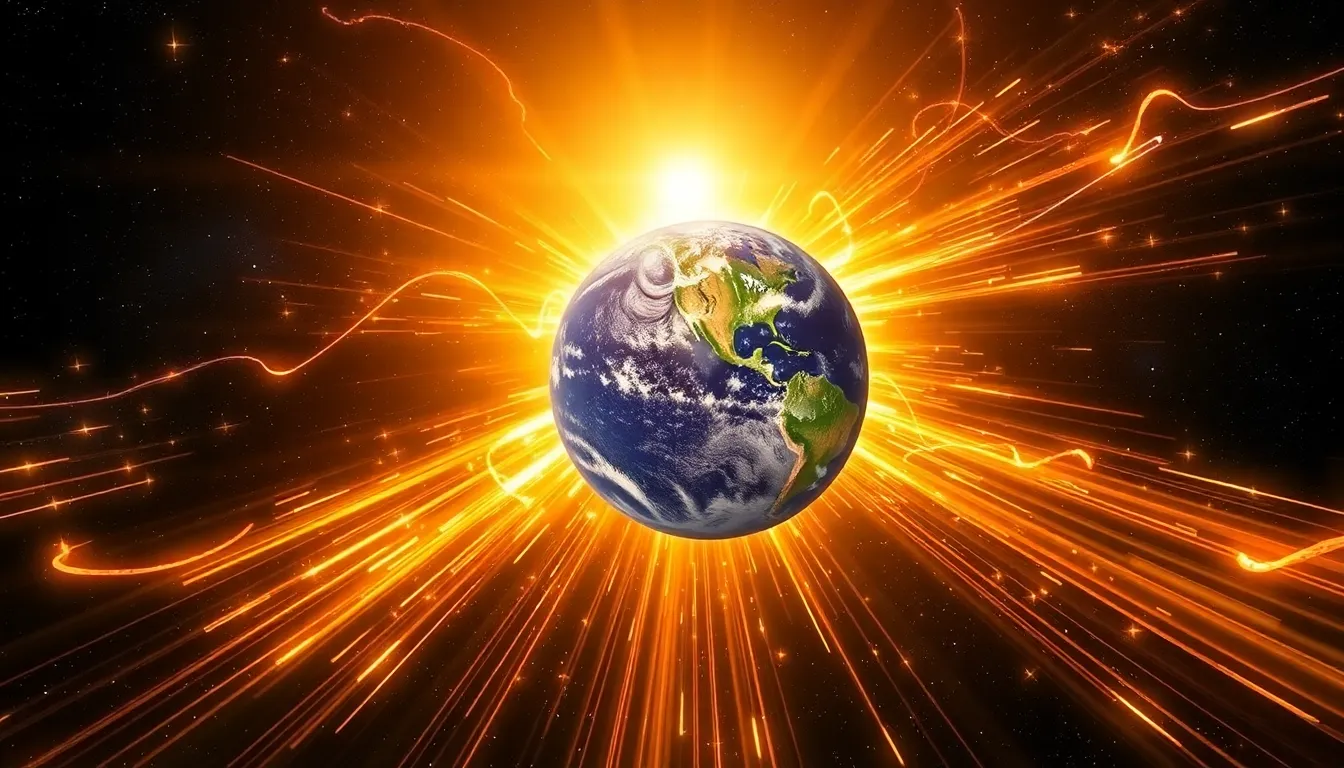
Understanding the sources of cosmic radiation helps in grasping its impact on Earth’s environment. Two primary sources exist: galactic cosmic rays and solar cosmic rays.
Galactic Cosmic Rays
Galactic cosmic rays originate from various sources, such as supernovae and active galactic nuclei. These high-energy particles, primarily protons, travel through interstellar space and reach Earth at astonishing speeds. Shock waves from supernova explosions propel these particles, allowing them to traverse vast distances across the galaxy. Researchers estimate that around 90% of cosmic rays detected near Earth come from outside the solar system. Cosmic ray detectors enable scientists to study these particles, offering insights into the universe’s high-energy phenomena.
Solar Cosmic Rays
Solar cosmic rays are generated by solar flares and coronal mass ejections emanating from the sun. During these explosive events, charged particles are released, including protons and electrons. These rays predominantly impact Earth’s atmosphere, leading to brief increases in radiation levels. Space weather phenomena associated with solar activity can influence the intensity and composition of these cosmic rays. During heightened solar activity, they pose specific risks to astronauts and high-altitude flights, making monitoring essential for safety. Understanding solar cosmic rays enhances knowledge of solar dynamics and their effects on the terrestrial environment.
Effects Of Cosmic Radiation
Cosmic radiation significantly impacts both health and the environment. Understanding these effects informs better safety practices and enhances knowledge of cosmic phenomena.
Health Impacts
Health risks associated with cosmic radiation include increased cancer incidence and genetic mutations. Astronauts experience higher exposure levels due to absence from Earth’s magnetic field, resulting in potential long-term effects. Studies indicate that for every 1,000 mSv of exposure, cancer risk rises by approximately 5%. Increased altitude during air travel elevates radiation levels, leading to an estimated additional exposure of 0.03 mSv per hour. Regular monitoring of cosmic radiation for those in aviation professions becomes essential, as it helps manage risks. Ongoing research aims to unravel the long-term consequences of cosmic radiation on human health.
Environmental Impacts
Environmental impacts of cosmic radiation manifest primarily through atmospheric chemistry alterations. Cosmic rays interact with atmospheric components, causing ionization and the formation of secondary particles, such as nitrogen oxides. These interactions contribute to changes in cloud formation, which influence climate patterns. The rate of cosmic radiation entering Earth’s atmosphere varies, correlating with solar activity; higher solar activity reduces cosmic ray intensity. Moreover, cosmic radiation contributes to background radiation levels, affecting ecosystems and natural processes. Continuous study of these environmental effects assists in understanding broader climate dynamics and radiation’s role in atmospheric science.
Measurement And Detection
Detection of cosmic radiation employs various instruments and methodologies. Instruments like scintillation detectors, Geiger-Müller counters, and charge-coupled devices measure radiation in different environments. Scintillation detectors use crystals that emit light when struck by radiation. Geiger-Müller counters, commonly used in labs, detect ionizing radiation through gas ionization.
Measurements of cosmic radiation vary based on altitude and geographic location. Airborne and space missions provide valuable data on radiation levels. For instance, space agencies utilize dosimeters to monitor astronaut exposure during missions. Ground-based observatories also capture cosmic ray data, enhancing global understanding.
Research highlights the significance of cosmic radiation measurement in aviation. Air travelers face increased exposure, with studies indicating an additional dose of about 0.03 mSv per hour. Regulatory bodies advise airlines on monitoring radiation during flights to ensure passenger safety. Continuous data collection helps assess risk levels tied to cosmic rays.
Radiation levels fluctuate with solar activity. Enhanced cosmic rays during solar flares increase exposure levels on Earth. Consequently, timely detection methods allow for predictions regarding radiation spikes linked to these solar events. Monitoring solar activities becomes crucial, especially for astronauts and airline operators.
Collaboration among scientists ensures robust data sharing and improved detection techniques. International efforts promote standardized measurement protocols, leading to better comprehension of cosmic radiation impacts. These collaborative approaches advance both safety measures and research outcomes in cosmic radiation studies.
Mitigation Strategies
Mitigating cosmic radiation involves several strategies to reduce exposure, especially for astronauts and frequent flyers. Shielding effectively minimizes radiation by using materials like aluminum and polyethylene. Spacecraft design incorporates layers of these materials to protect against galactic cosmic rays.
Monitoring radiation levels plays a crucial role in protecting human health. Instruments such as Geiger-Müller counters and dosimeters provide real-time data on radiation exposure. These tools help to establish safer protocols for missions beyond Earth’s atmosphere.
Adjusting flight paths also reduces exposure during air travel. Airlines can shift routes to lower radiation zones, particularly during solar flare events. Implementing these changes enhances passenger safety and maintains awareness of cosmic activity.
Educating crews and passengers on cosmic radiation risks and safety protocols is essential. Effective training programs can prepare flight attendants and pilots to respond to elevated radiation levels. Clear communication ensures that all personnel understand the precautions needed during space missions and high-altitude flights.
Designing spacecraft with built-in radiation detection systems further improves safety. These systems can automatically adjust shielding in response to varying radiation levels. Customizing protection based on real-time data enhances the resilience of crewed missions.
Collaborative research efforts among scientists, engineers, and health professionals contribute to better mitigation strategies. Sharing findings across disciplines allows for more comprehensive safety measures. Collective knowledge enhances understanding of cosmic radiation and its effects while informing new technologies.
Cosmic radiation is a complex and intriguing aspect of our universe that warrants ongoing attention. Its effects on both human health and the environment highlight the necessity of understanding this phenomenon. As research progresses scientists continue to uncover the intricacies of cosmic radiation and its implications for space travel and atmospheric science.
The importance of monitoring radiation levels cannot be overstated especially for those who frequently travel at high altitudes. By implementing effective mitigation strategies and enhancing detection methods the risks associated with cosmic radiation can be managed. This knowledge not only enriches our understanding of the cosmos but also ensures safer journeys for astronauts and passengers alike.