
Have you ever gazed up at the night sky and pondered how far humanity can roam among the stars? With current technology, space travel is closer than ever, though perhaps not as close as we might like. Even though this, advancements in rocket science and technology have made it possible to adventure beyond our blue planet. So, buckle up as we embark on a journey through the cosmos, exploring how far we can venture using today’s state-of-the-art tech.
How Far Can We Travel In Space With Current Technology
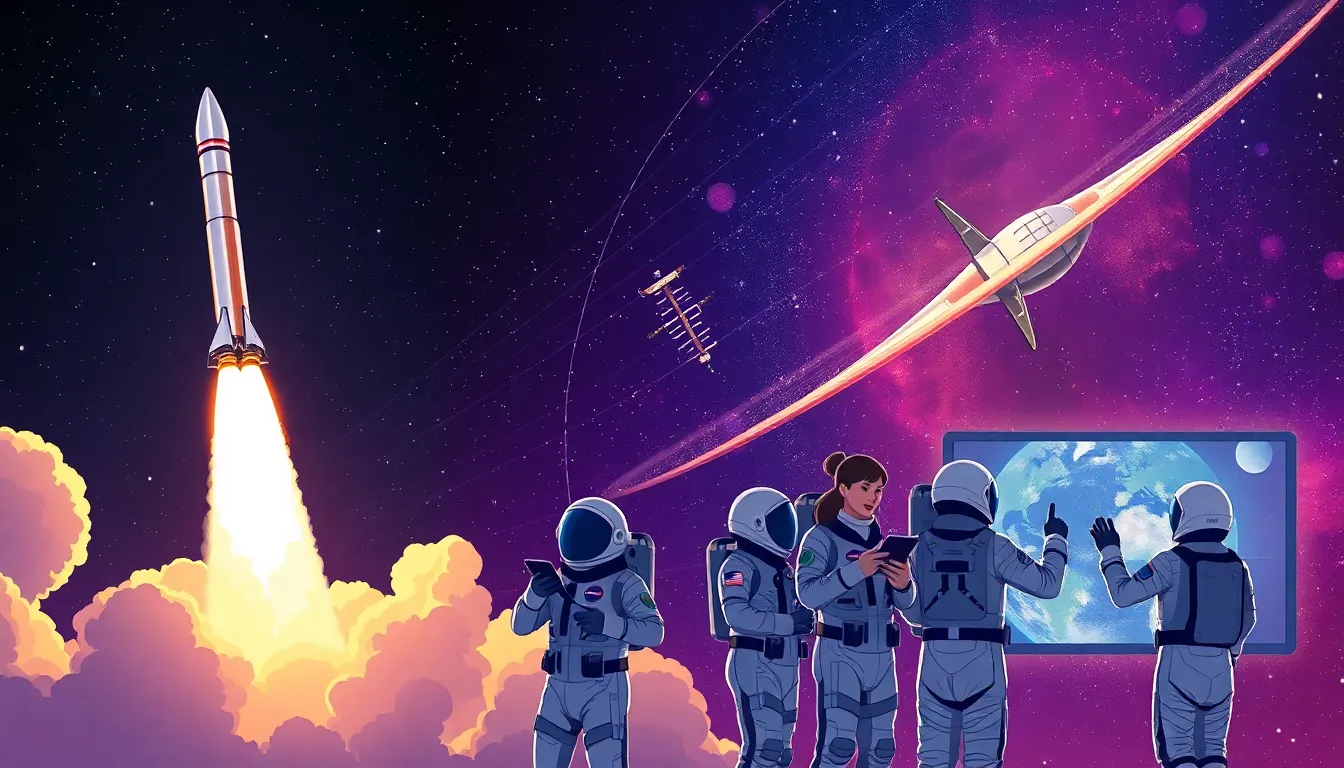
Space travel has transformed from a fleeting dream to a tangible reality. Presently, we use a few main types of spacecraft developed by space agencies and private companies.
- Orbital Rockets: These are the heavyweights of space transport. Rockets like SpaceX’s Falcon 9 and NASA’s Space Launch System (SLS) have pushed the envelope, capable of launching larger satellites or even crewed missions into low Earth orbit (LEO) and beyond.
- Space Probes: Unmanned spacecraft such as Voyager 1 and 2 have traveled further than anything human-made. Launched in the late 1970s, these probes are now in interstellar space, gathering data and sending back precious information about our solar system’s boundaries.
- Crewed Spacecraft: The International Space Station (ISS) serves as a testament to human ingenuity. Built as a collaborative effort among various countries, it orbits Earth and provides a platform for scientific research and international cooperation.
This technology, while groundbreaking, only scratches the surface of our cosmic potential. But how far can we really go?
Key Milestones In Space Exploration
Throughout history, several key milestones have paved the way for current space travel. Each of these moments marks a leap in ability, pushing the boundaries a little further.
- 1961: Yuri Gagarin becomes the first human to travel into space and orbit Earth, showcasing what’s possible.
- 1969: Apollo 11 lands on the Moon, marking humanity’s first footfall on another celestial body. If it’s not clear by now, they were pretty much the original space tourists.
- 1977: Voyager 1 and 2 launch, embarking on their epic journeys that now reach the edge of our solar system. Who needs travel agencies when you’ve got the universe?
- 1998: The ISS is launched, providing a modern marvel of international cooperation in space.
- 2020s: The dawn of commercial space travel has begun. Companies like SpaceX and Blue Origin are not just dreaming, they’re already testing the waters of tourism in space.
Each step represents a significant advance, and the adventures of yesteryear have allowed us to peer into the future.
The Limits Of Current Propulsion Systems
Understanding the limits of our propulsion systems is essential to grasping how far we can travel. Current technology primarily relies on chemical propulsion, which works by expelling mass at high speed to generate thrust.
But, these systems have their limitations:
- Speed Constraints: The fastest spacecraft, Parker Solar Probe, travels at around 430,000 miles per hour, but this astounding speed only allows it to reach our nearest star, Proxima Centauri, in about 6,700 years. Talk about a long road trip.
- Fuel Efficiency: Chemical fuels are heavy and not very efficient for longer journeys. For example, a mission to Mars currently requires significant amounts of fuel, limiting payload capacities.
- Travel Duration for Further Destinations: The technology we have right now can’t feasibly take us to distant planets or star systems within a human lifespan. While we can send probes on missions lasting decades, crewed missions face challenges of food, life support, and radiation exposure.
While existing propulsion systems have led to remarkable achievements, they also signify our current travel limitations.
Potential Future Technologies For Space Travel
The horizon of space travel is filled with exciting possibilities. Engineers and scientists are actively seeking innovative propulsion methods.
- Nuclear Thermal Propulsion (NTP): This technology promises to enhance fuel efficiency by using a nuclear reactor to heat propellants. NTP could cut travel time to Mars down to a few months, yes, please.
- Ion Drives: These engines use electricity to accelerate ions, providing a gentle yet efficient thrust that can sustain long missions. Although currently used for satellite maintenance and deep space probes, they offer hope for future ventures.
- Solar Sails: Harnessing sunlight to propel spacecraft, these sails could allow long-distance travel without the need for traditional fuel. Fans of light-speed journeys should take note.
- Warp Drives and Other Theoretical Concepts: Certainly, theoretical technologies like warp drives capture the imagination. These ideas are still rooted in speculation and require breakthroughs in physics, but just imagine bending space for faster-than-light travel.
As these technologies develop, our dreams of touching the stars may inch closer to reality.
Challenges Of Long-Distance Space Travel
While the future looks bright, it’s important to recognize the hurdles that accompany long-distance space travel.
- Health Risks: Long exposure to microgravity can negatively impact the human body, affecting muscle mass and bone density. Research is ongoing to discover how to counteract these effects.
- Radiation Exposure: Cosmic rays and solar radiation present significant dangers beyond Earth’s protective atmosphere. Effective shielding and safety protocols need development.
- Psychological Challenges: Isolation and confinement during extended missions can affect the mental well-being of astronauts. Finding ways to keep morale high and manage connections back home is a unique aspect of space travel that needs attention.
- Logistical Hurdles: Transporting food, water, and air for long missions presents monumental challenges in terms of resources and sustainability. Engineers must find ways to recycle resources efficiently or develop sustainable life-support systems.
Addressing these challenges requires collective effort and innovation, but the stakes couldn’t be higher.
The Importance Of Space Travel To Humanity
So why should we even care about traveling in space? Well, the benefits reach far beyond mere exploration.
- Scientific Discovery: Every mission brings forth new knowledge, pushing the boundaries of what we know about the universe and our place within it. This is vital for our advancement.
- Technological Advancements: The quest for space has driven numerous technological breakthroughs that improve life on Earth, from advancements in materials to medical technologies, benefiting humanity in unexpected ways.
- Inspiration for Future Generations: Space travel ignites curiosity and fosters ambition in young minds. The more people dream about the cosmos, the more potential for innovation and progress.
- Global Collaboration: The ISS exemplifies how countries can come together for a common goal. Fostering international cooperation can lead to significant diplomatic strides and shared knowledge.
Eventually, space travel is not just a far-off venture: it represents our unyielding curiosity and desire to reach beyond the stars.