
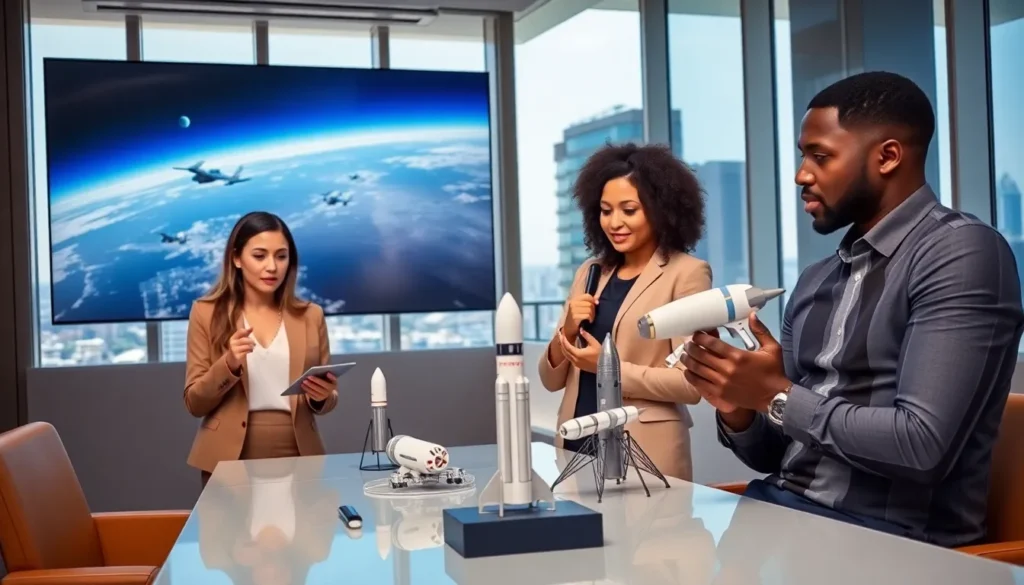
Have you ever wondered what keeps those shiny satellites whizzing around above us? Or how scientists manage to send rovers to explore Mars while we’re still trying to park in our local shopping mall? Space technology is the key, but it’s not just for rocket scientists and astronauts. It impacts our daily lives more than you might think, from GPS navigation to climate monitoring. Buckle up as we venture through the fascinating universe of space technology, discovering its importance, components, and what’s on the horizon.
What Is Space Technology
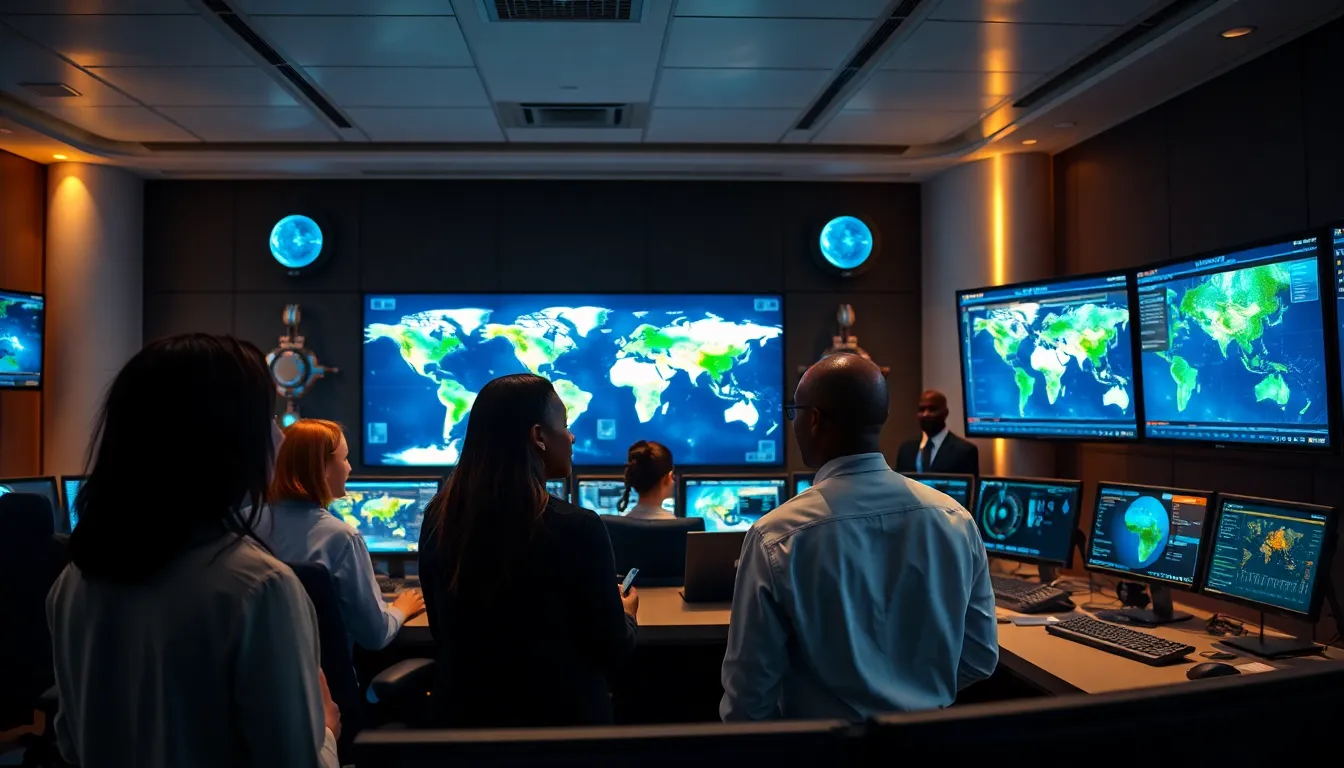
Space technology plays a crucial role in shaping not only our understanding of the universe but also enhancing life on Earth. It allows us to monitor weather patterns, track climate changes, and even predict natural disasters. Space advancements contribute significantly to national security, enabling surveillance and communication systems that keep populations safe. Also, the innovations stemming from this field create numerous jobs and boost economies as nations invest heavily in their space programs.
The importance of space technology extends into everyday items as well, from telecommunications to the miniaturization of electronics we use daily. Imagine losing your phone signal or your GPS just when you need directions during a road trip. The influence of space technology is pervasive, touching almost every aspect of modern life.
Key Components of Space Technology
At the heart of space technology lie several key components that make everything possible. These include satellites, launch vehicles, space stations, and communication systems.
- Satellites: They orbit the Earth and help various functions, such as gathering data for weather forecasts, enabling global positioning systems (GPS), and providing internet services. Satellites come in different types, including geostationary and low Earth orbit, each serving specific purposes according to their altitude and position.
- Launch Vehicles: Rockets and shuttles designed to transport payloads, including satellites and crew, into space fall into this category. The engineering behind these vehicles ensures they can escape Earth’s gravitational pull, a true marvel of engineering.
- Space Stations: Platforms like the International Space Station (ISS) serve as unique laboratories, allowing research in microgravity environments. These installations help scientists study everything from biology to materials science, deepening our understanding of various phenomena.
- Communication Systems: These include the ground systems and technologies that relay information and commands between Earth and space, allowing for data collection and operational coordination.
Types of Space Technology
The types of space technology can be broadly categorized into several fields, each focusing on a different aspect of exploration and utilization:
- Exploratory Technology: This includes probes and landers designed to investigate celestial bodies, think Mars rovers or Voyager spacecraft exploring the outer solar system.
- Telecommunication Technology: Essential for global communication, this technology encompasses satellites used in broadcasting, internet access, and mobile communications. They ensure that our Netflix shows stream seamlessly, no matter where we are.
- Earth Observation Technology: Instruments that monitor environmental changes from space assist in agriculture, forestry, and disaster management. They provide critical data that helps predict crop yields and assess deforestation rates.
- Research Tools: Including laboratory equipment used aboard space stations to conduct scientific experiments in microgravity, these tools are vital for advancing knowledge in various scientific fields.
Advancements in Space Technology
Over the past few decades, space technology has seen remarkable advancements, driven by both governmental and private entities. Innovations such as reusable rockets, pioneered by companies like SpaceX, have revolutionized cost efficiency in space travel and increased access to space.
New materials and engineering techniques have led to lighter, more durable spacecraft, allowing for longer missions beyond Earth’s orbit. Exploration missions are becoming more ambitious, with plans for crewed missions to Mars and potential settlements on the Moon. Notable experiments, such as 3D printing in space and growing food aboard the ISS, reflect the ingenuity that characterizes modern space endeavors.
Also, artificial intelligence is being integrated into spacecraft, enhancing navigational capabilities and autonomous decision-making that can adapt to unforeseen situations.
Challenges Facing Space Technology Development
Even though the exciting advancements, several challenges persist in the realm of space technology development.
- Funding: Space missions are notoriously expensive. Securing funding for projects often reveals a tug-of-war between national priorities, economic downturns, and scientific exploration.
- Space Debris: The increasing volume of debris from satellites, spent rockets, and other waste poses significant risks to operational spacecraft. Developing ways to clean up this debris or designing smarter spacecraft that can avoid collisions is becoming urgent.
- Technological Limitations: Overcoming the harsh conditions of space, such as extreme temperatures and radiation, requires continuous research and adaptation.
- Public Interest and Support: The success of space technology often relies on its visibility and public support. Keeping the public engaged and informed about the benefits of space exploration is essential.
The Future of Space Technology
Looking ahead, the future of space technology holds immense promise. With private companies like Blue Origin and SpaceX pushing boundaries, we can expect a new era of commercial spaceflight and exploration. Plans for colonizing Mars and establishing bases on the Moon indicate that humans might soon live and thrive on celestial bodies beyond Earth.
The development of satellite internet systems aims to provide global internet access, bridging the digital divide. Besides, advancements in propulsion technologies, such as the use of nuclear thermal rockets, could drastically shorten travel times to distant planets. As curiosity leads the charge, innovation continues to reshape our understanding and utilization of the vast universe.